How to Make Your Home Look Expensive on a Budget
You do not need a designer budget to make your home look polished, elegant, and thoughtfully decorated. The secret is less about buying expensive […]
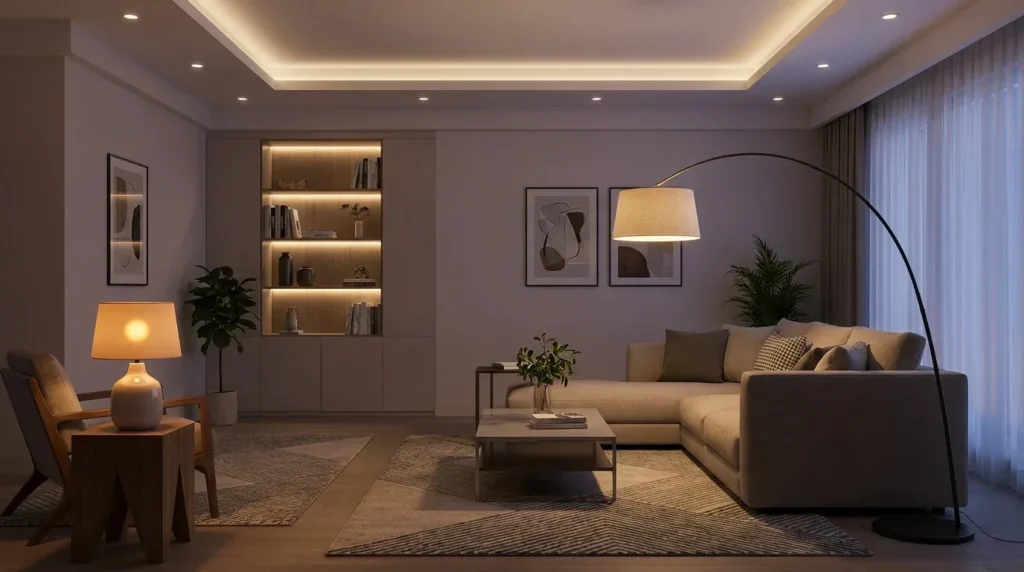
You do not need a designer budget to make your home look polished, elegant, and thoughtfully decorated. The secret is less about buying expensive things and more about choosing the right colors, proportions, textures, lighting, and finishing details. A few strategic upgrades can make an ordinary room feel considerably more luxurious without requiring a full renovation.
Whether you are refreshing a rental, decorating your first home, or simply tired of a space that feels unfinished, these budget-friendly ideas can help you create a sophisticated look while keeping spending under control.
1. Start With a Calm, Cohesive Color Palette
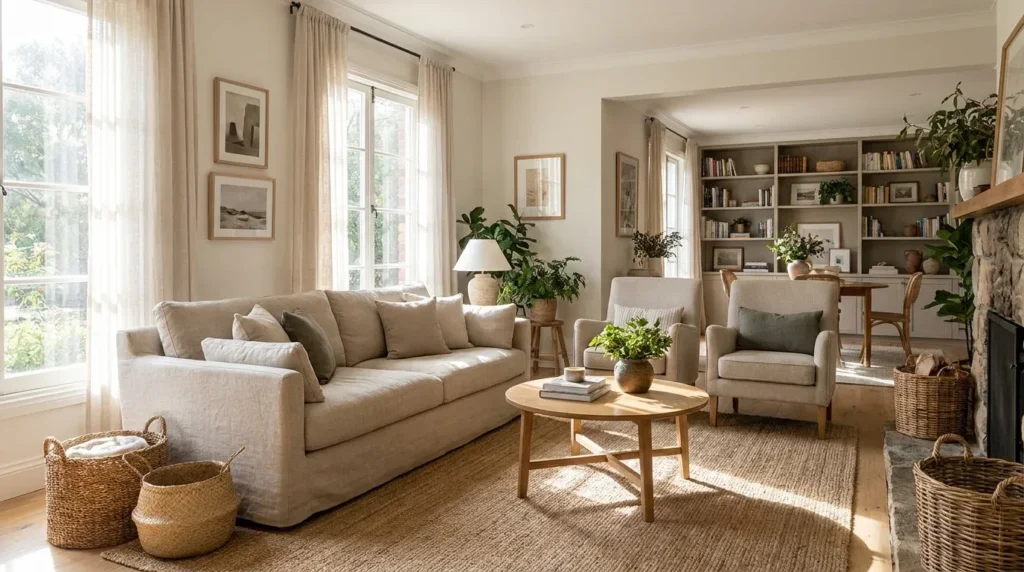
One of the easiest ways to make a home look more expensive is to simplify its color palette. Rooms often feel inexpensive when too many unrelated colors compete for attention. Instead, choose a base of two or three complementary shades and repeat them throughout the room. Warm whites, soft beige, taupe, muted gray, olive, navy, and earthy brown can all create an elevated foundation.
You do not have to repaint every room. Even inexpensive changes such as coordinating curtains, pillow covers, rugs, and decorative objects can make the space feel more intentional. If your walls are already neutral, use one deeper accent color through artwork, upholstery, or accessories.
The goal is consistency rather than perfection. When colors relate to one another, inexpensive furniture and accessories can look like they were selected as part of a complete design plan.
2. Upgrade Your Lighting for an Instant Luxury Effect
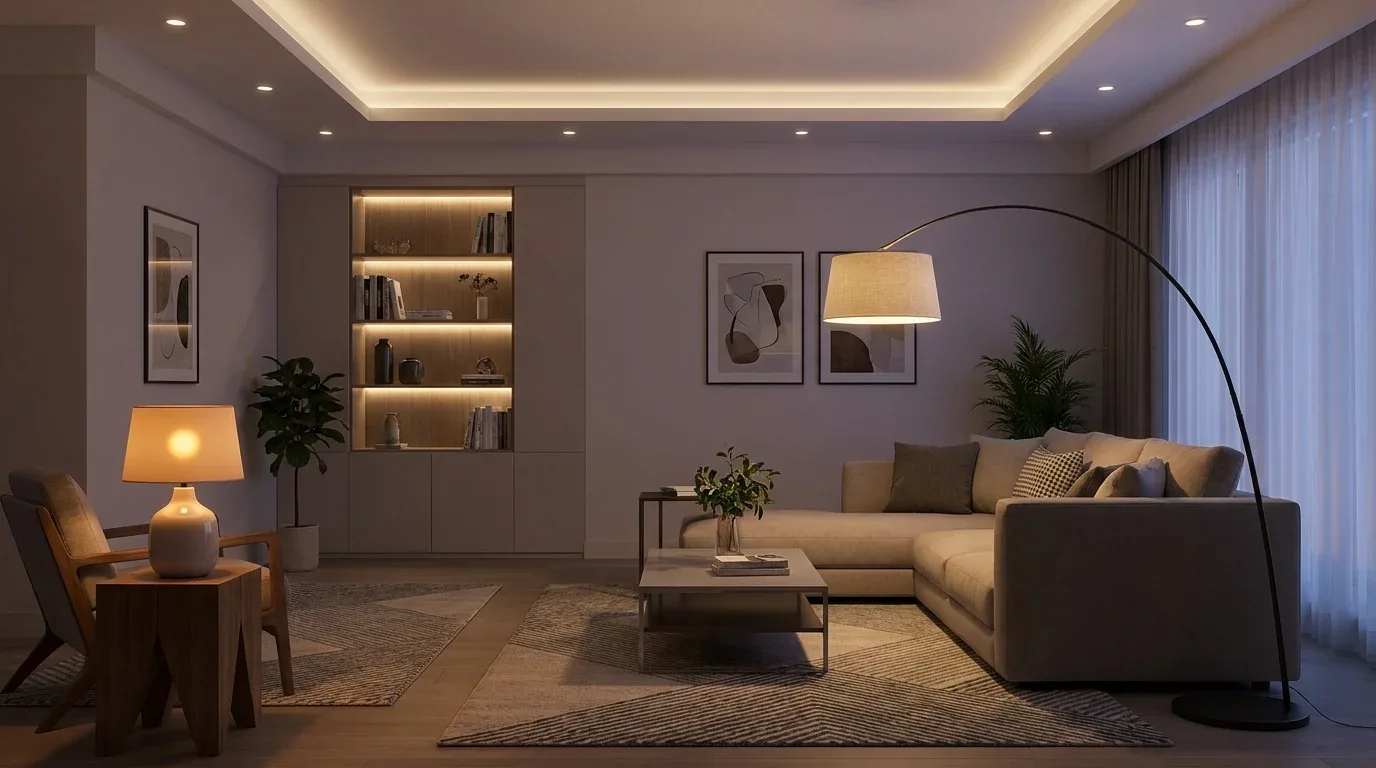
Good lighting can completely change how a room looks and feels. Harsh overhead lighting tends to make even attractive interiors feel flat, while layered lighting creates warmth and depth. You can get this effect without rewiring your home.
Begin by adding at least two different light sources in frequently used rooms. A table lamp beside a sofa, a floor lamp in an empty corner, or a small lamp on a console can make a noticeable difference. Choose bulbs with a warm color temperature for living rooms and bedrooms rather than overly cool white bulbs.
Affordable fixtures can also look sophisticated when their shape and finish complement the rest of the room. Look for simple silhouettes in materials such as glass, linen, ceramic, brushed metal, or matte finishes. Replacing outdated lampshades is another inexpensive trick: a fresh shade can make an old lamp feel surprisingly current.
3. Make Your Windows Look Taller and More Elegant
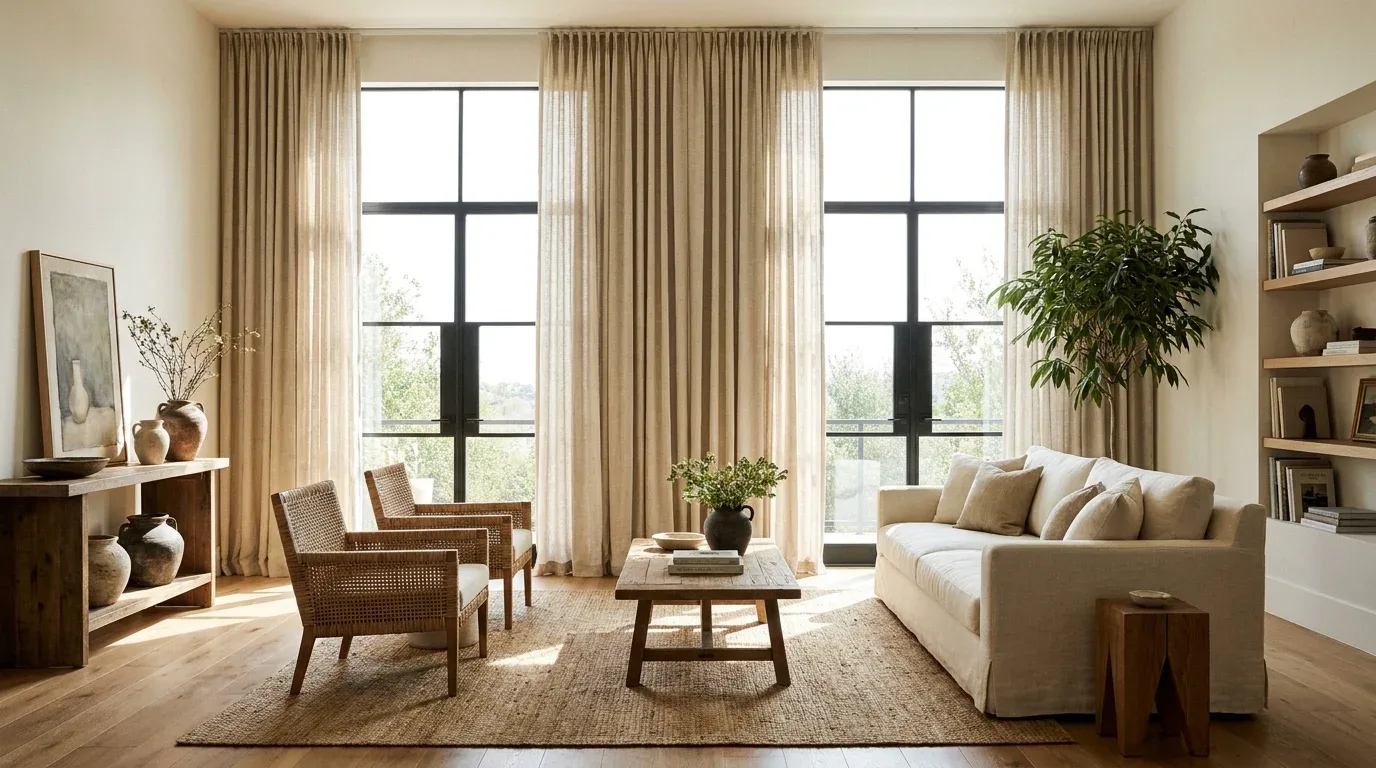
Window treatments are one of the most overlooked opportunities for creating a high-end look. Curtains that are mounted too low or barely extend beyond the window can make ceilings appear shorter and windows feel smaller. A better approach is to mount the curtain rod several inches above the window frame and extend it beyond both sides when possible.
Choose curtains that reach the floor or come close to it. Linen-look, cotton, or textured polyester panels can provide the appearance of custom treatments without the custom price. Neutral curtains are especially versatile, but a subtle pattern or rich solid color can work beautifully if the rest of the room is restrained.
Fuller curtains generally look more luxurious than narrow panels because they create soft folds. If your existing curtains are too short, replacing them may have a greater visual impact than buying several new decorative accessories. This is a relatively small change that can improve the proportions of an entire room.
4. Use Large-Scale Art Instead of Lots of Small Decor
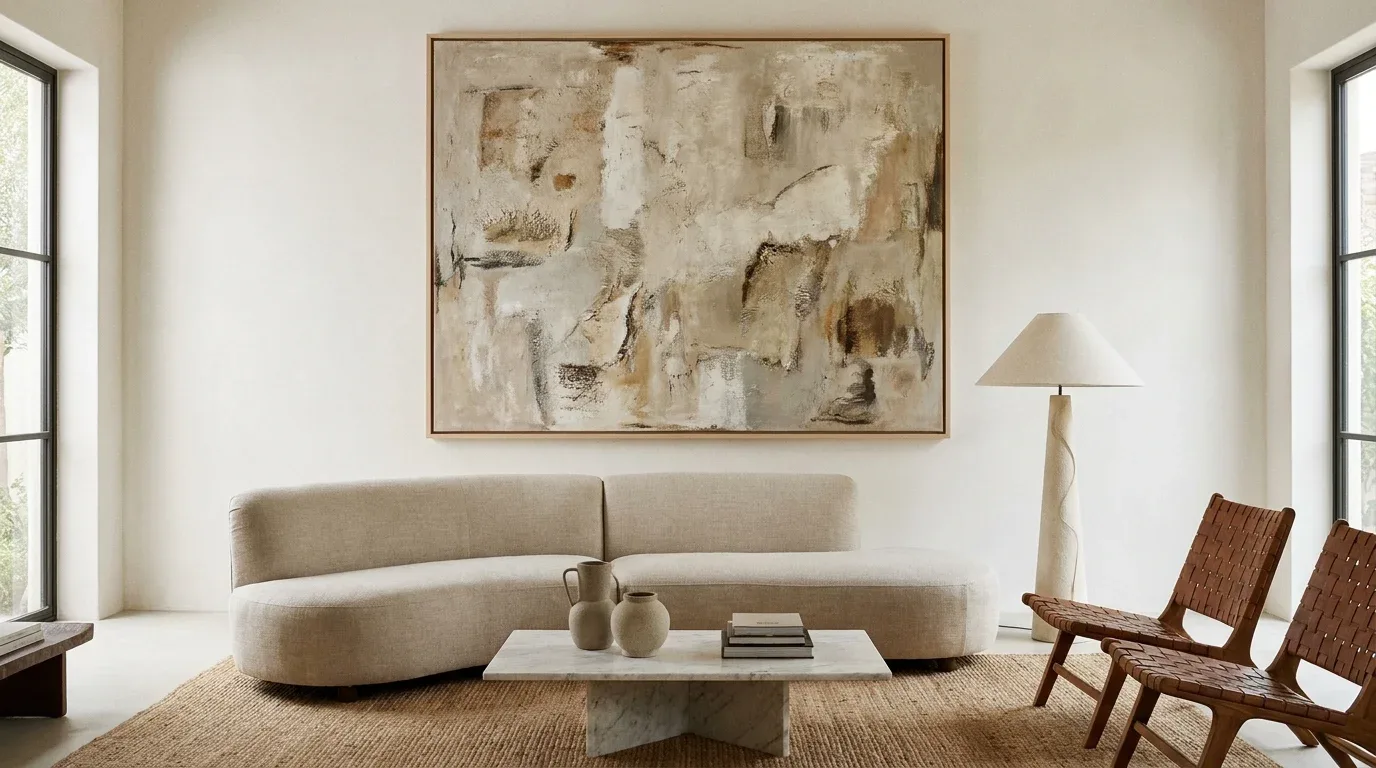
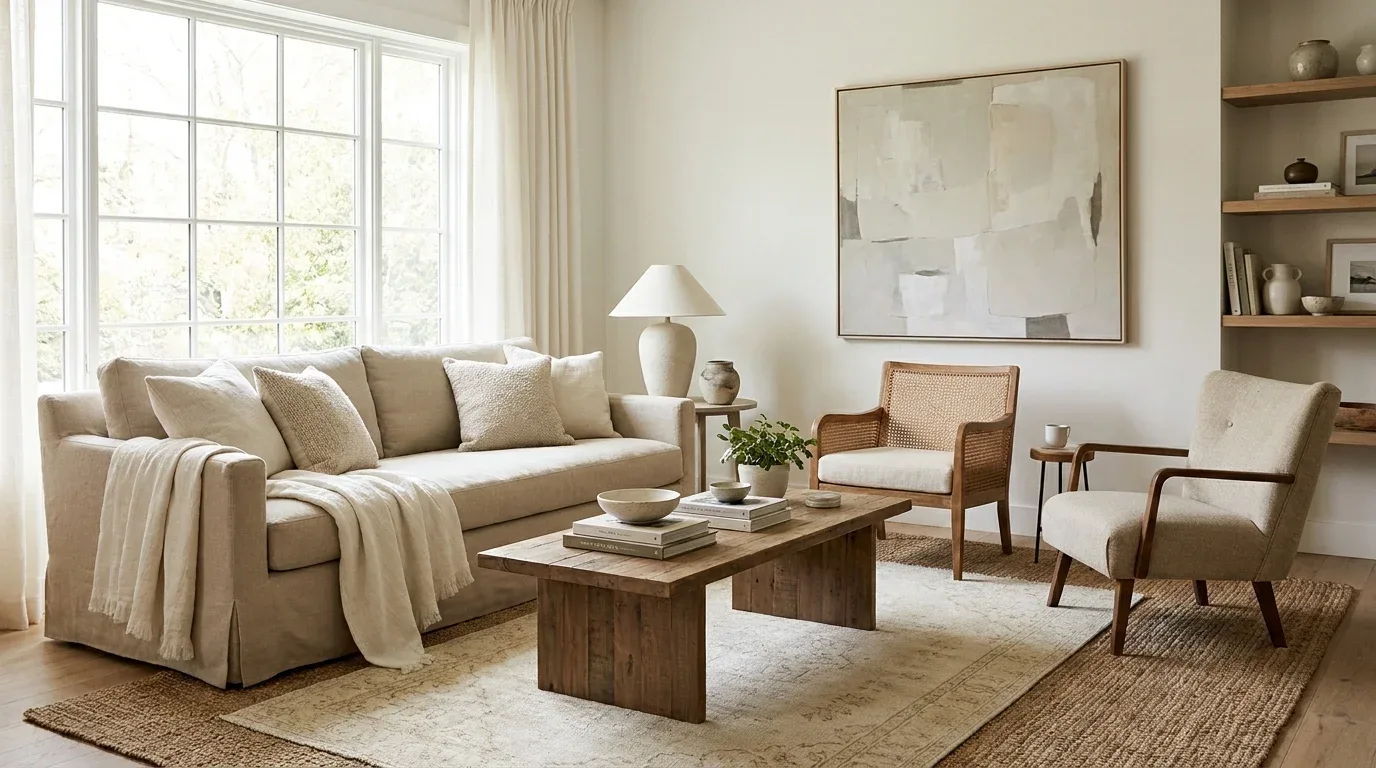
Expensive-looking interiors usually have a few intentional focal points rather than dozens of small objects scattered everywhere. Large artwork is particularly effective because it gives a wall visual weight and makes a room feel designed.
You do not need an expensive original painting. Look for affordable prints, vintage posters, downloadable artwork, photography, or oversized abstract pieces. The important factors are scale, framing, and placement. A piece that is large enough for the wall can have far more impact than several tiny prints that disappear visually.
Frames can also make inexpensive art feel more refined. Simple black, natural wood, or metallic frames tend to work well with many decorating styles. For a collected look, combine one large statement piece with a small number of complementary objects rather than filling every empty wall.
When hanging art above furniture, pay attention to proportion. A common mistake is choosing artwork that is too small for the sofa, bed, or console beneath it. When in doubt, go slightly larger and keep the surrounding wall relatively uncluttered.
5. Add Texture With Affordable Fabrics and Natural Materials
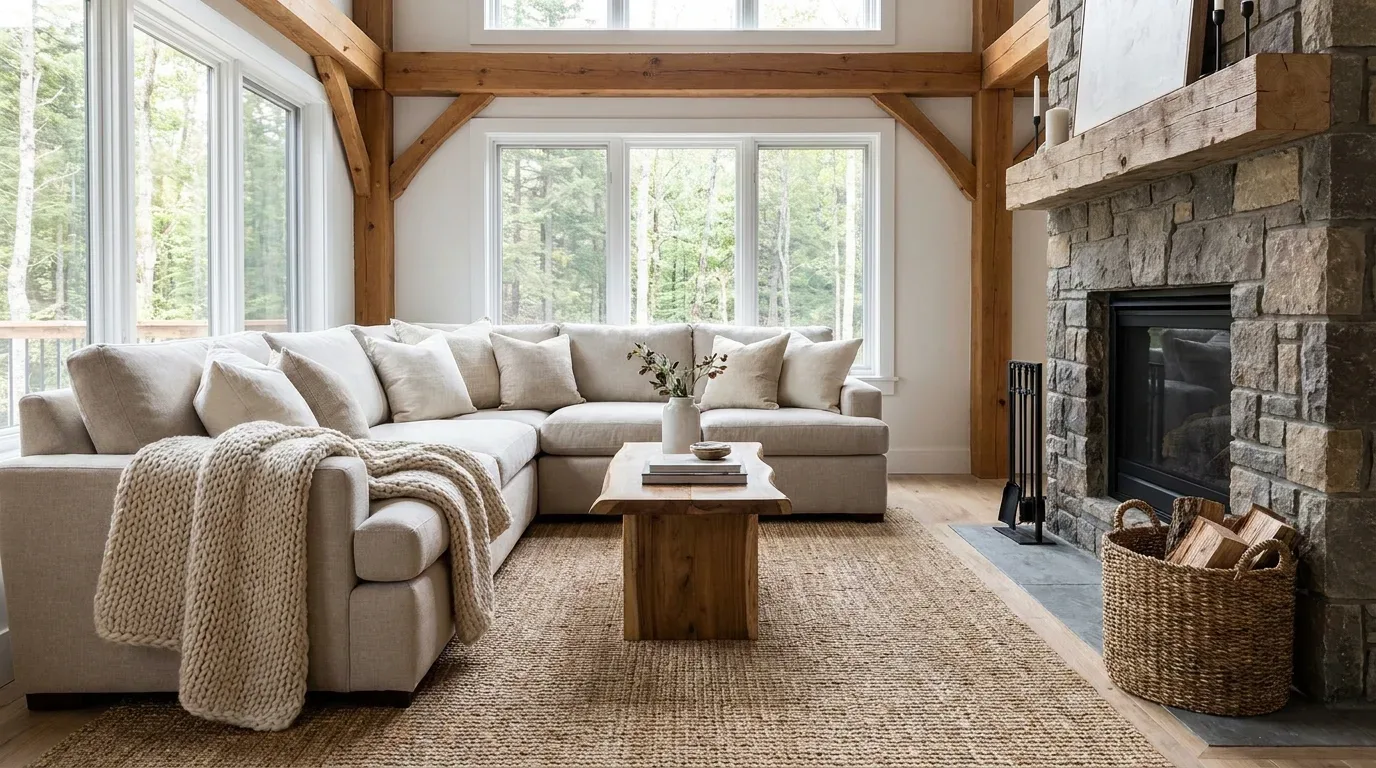
Luxury is often communicated through texture rather than price. A room filled with flat, matching surfaces can feel basic even when the furniture is attractive. Introducing different tactile materials creates depth and makes the space feel more layered.
Start with easy swaps such as throw pillows, blankets, curtains, and rugs. Combine materials rather than buying everything in the same fabric. For example, pair a soft cotton pillow with a chunky knit throw, a woven basket, and a slightly nubby rug. These small variations make a room more interesting.
Natural-looking materials are especially useful for an elevated budget-friendly style. Wood, rattan, jute, linen, stoneware, cane, and woven fibers can soften rooms filled with mass-produced furniture. You can also shop secondhand for wooden stools, baskets, trays, and ceramic pieces, where texture often matters more than brand.
The key is restraint. A few contrasting textures usually look more sophisticated than a room filled with competing patterns and finishes.
6. Declutter and Style Surfaces With Intention
One of the least expensive ways to make your home look better is to remove things that do not need to be there. Clutter hides the architectural features, furniture, and decorative pieces that could otherwise make your home feel polished.
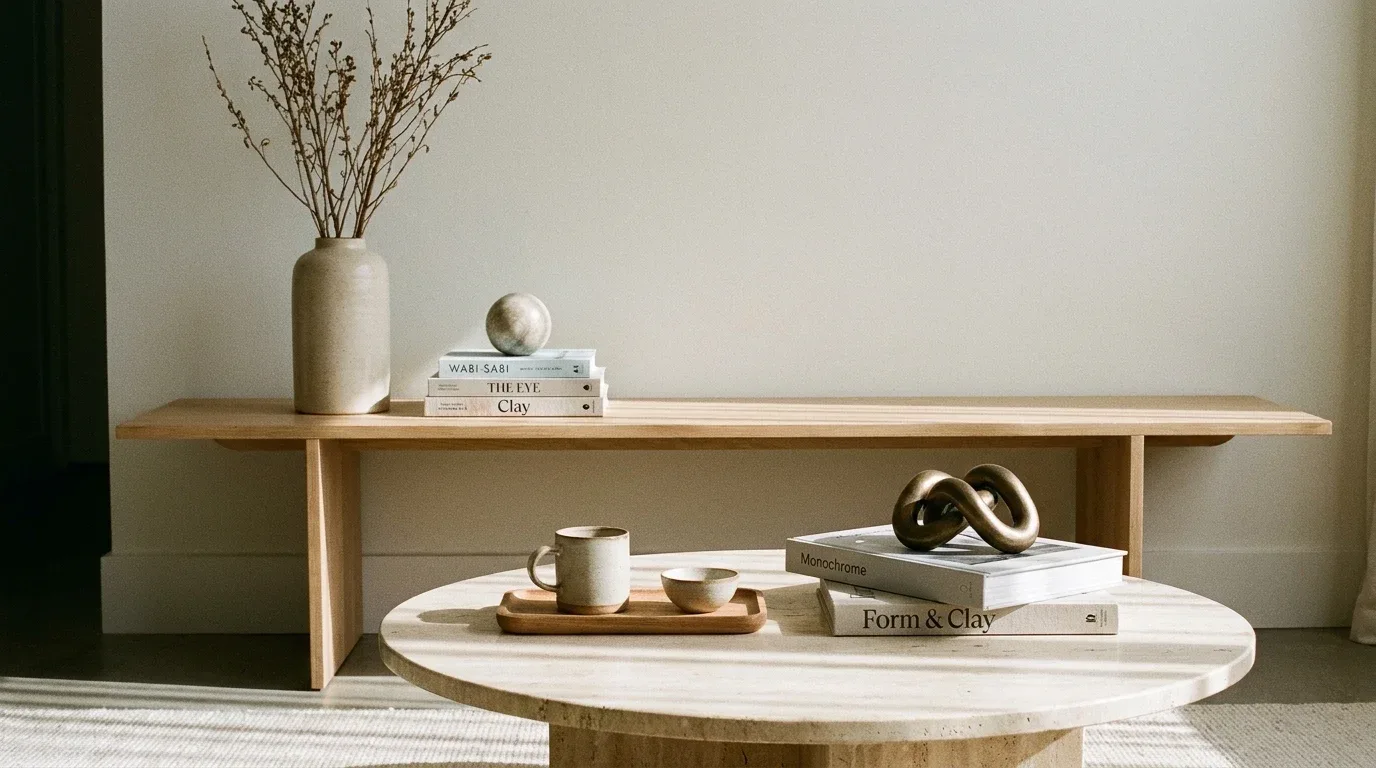
Start with visible surfaces such as coffee tables, kitchen counters, bathroom vanities, nightstands, and entryway consoles. Remove anything that is rarely used or visually distracting. Then return only the objects that are useful or genuinely attractive.
When styling a surface, group items instead of spreading them evenly across it. A tray can organize a coffee table, while a small stack of books, a vase, and one decorative object can create a simple focal point. Varying height also helps: combine a low object with something taller rather than lining up several pieces at the same level.
This approach creates the impression that every item has a purpose. It also makes cleaning easier, which is an underrated part of maintaining an expensive-looking home.
7. Give Your Kitchen and Bathroom Small High-Impact Updates
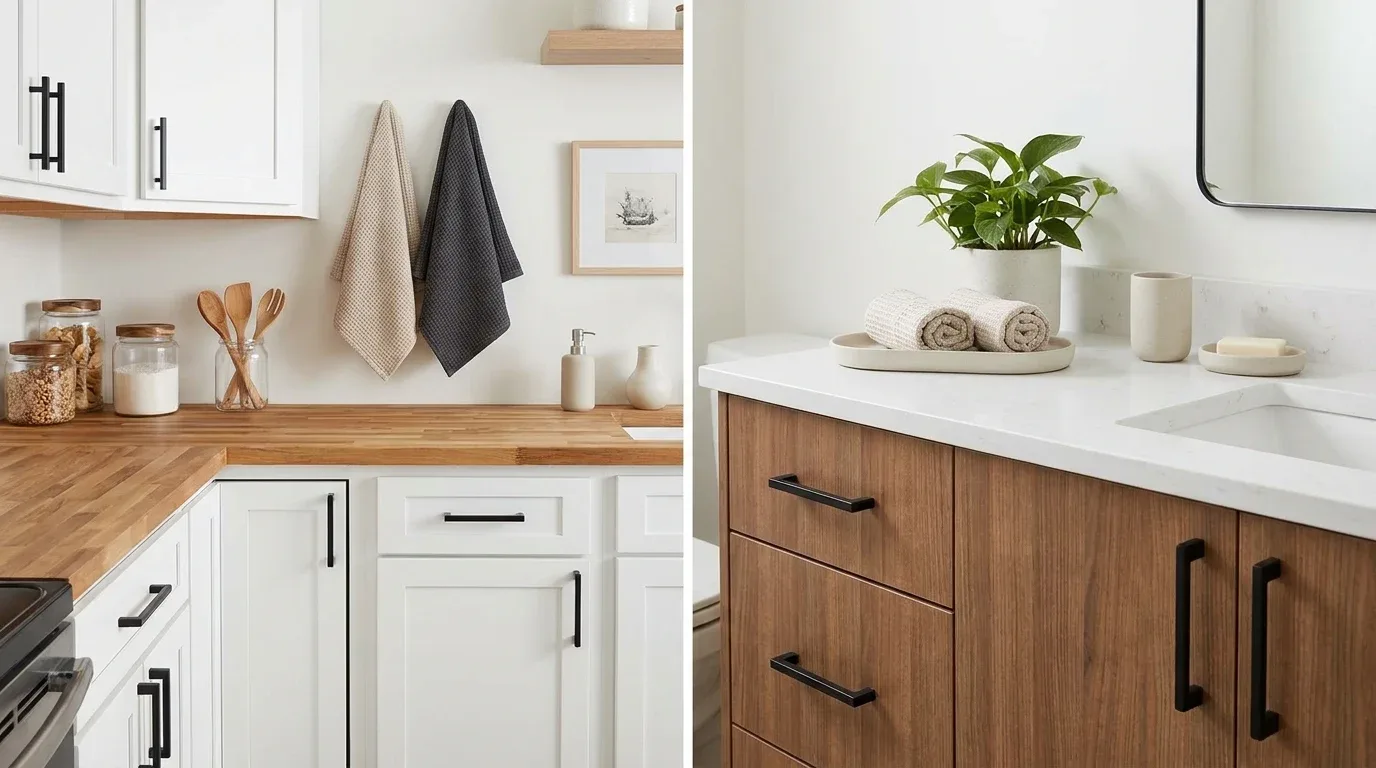
You do not need to remodel a kitchen or bathroom to make it feel more sophisticated. Focus on the details that people interact with and notice most often. Replacing outdated cabinet hardware is one of the simplest upgrades, and cohesive knobs or pulls can make inexpensive cabinetry look considerably more intentional.
In the kitchen, decanting frequently used dry goods into matching containers can reduce visual clutter. A wooden cutting board, a ceramic utensil holder, or a small bowl of fresh fruit can add warmth without requiring major spending. Keep countertop accessories limited so the room feels clean and spacious.
Bathrooms benefit from similarly small changes. Replace worn towels with coordinated, generously sized ones and add a simple bath mat with a substantial texture. A framed print, attractive soap dispenser, or small plant can provide a finishing touch.
For both rooms, consistency matters more than cost. Matching finishes and limiting visual clutter can make builder-grade spaces feel much more customized.
8. Choose Furniture for Proportion, Not Just Price
Furniture can make or break the perceived quality of a room. The most expensive sofa will not look luxurious if it is too large for the space, while an affordable piece can look polished when its scale and placement are right.
Before buying anything, measure the room and consider how much walking space you need. Avoid pushing every piece against the walls simply because it is the easiest arrangement. In many living rooms, floating the sofa or chairs slightly away from the wall creates a more intentional layout.
If you are shopping on a budget, prioritize the largest pieces first. A well-proportioned sofa, bed, dining table, or rug usually has a greater impact than a collection of small accessories. Search secondhand marketplaces, estate sales, consignment stores, and local thrift shops for solid pieces that can be refreshed with new hardware, paint, or upholstery.
Before purchasing, ask whether the item will still work if you change your accessories later. Timeless shapes and versatile neutral upholstery generally give you more flexibility and make decorating on a budget easier over time.
9. Create a More Expensive Look With Simple Styling Rules
Once the major elements are in place, a few styling principles can pull everything together. Repeat finishes instead of introducing a different metal, wood tone, or color for every object. Repetition creates visual rhythm and makes a room feel cohesive.
Use odd-numbered groupings when arranging accessories, and vary the height of objects within each grouping. Leave some empty space around decorative pieces so they can stand out. This is particularly important on bookshelves, consoles, and coffee tables, where too many objects can quickly make the room feel crowded.
Plants and fresh flowers can also add life without requiring a large investment. Choose one or two substantial plants rather than filling every corner with small ones. Even grocery-store flowers can look elegant when arranged simply in a clean vase.
Finally, keep an eye on condition. Dusty surfaces, crooked artwork, tangled cords, chipped accessories, and wrinkled textiles can undermine an otherwise attractive room. Regular editing and maintenance often create more visual impact than another shopping trip.
10. Shop Strategically Instead of Decorating All at Once
A polished home usually develops over time. Trying to buy everything at once can lead to impulse purchases that do not work together. Instead, create a priority list based on what has the biggest visual impact and what your home actually needs.
Begin with foundational pieces such as lighting, curtains, rugs, and major furniture. Then add artwork and textiles before finishing with smaller accessories. This order helps you avoid buying decorative objects that later compete with larger pieces.
Set a specific budget for each project and compare prices across thrift stores, resale marketplaces, discount retailers, and local home stores. Look for sales on items that are worth buying new, but do not assume a higher price automatically means better design.
Most importantly, give yourself permission to wait. An empty corner is better than an expensive item you do not love. A home that looks expensive is rarely about how much was spent; it is about thoughtful choices, good proportions, restraint, and attention to detail.
 10 Simple Home Decor Ideas to Refresh Your Space