Modern Home Decor Trends That Transform Any Room
Modern home decor is less about following every new fad and more about creating rooms that feel fresh, intentional, comfortable, and personal. The best […]
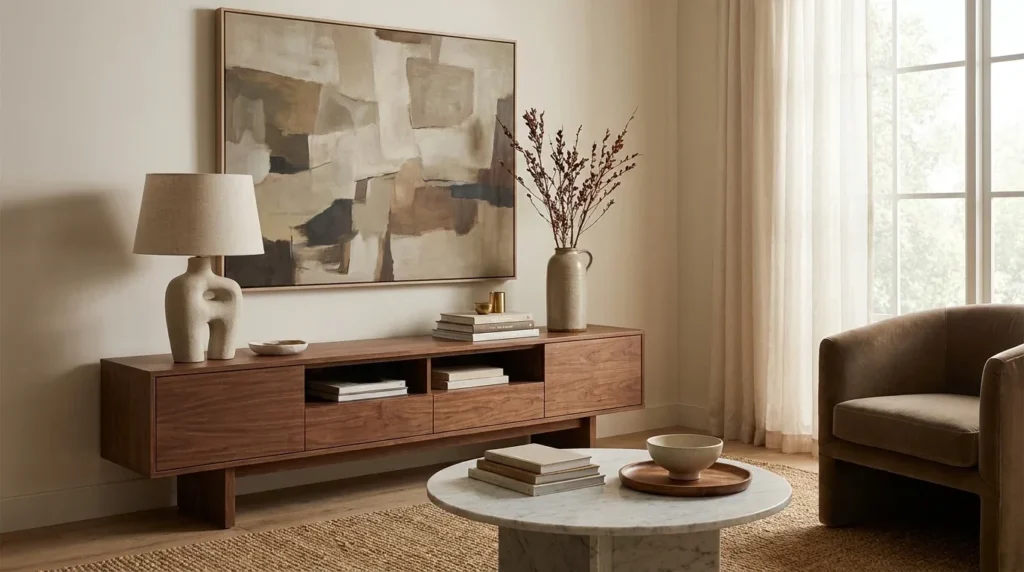
Modern home decor is less about following every new fad and more about creating rooms that feel fresh, intentional, comfortable, and personal. The best current trends combine clean lines with warmth, natural materials with contemporary finishes, and practical design with visual character. Whether you are refreshing a living room, bedroom, kitchen, dining area, or home office, a few thoughtful changes can make the entire space feel more elevated.
The key is choosing trends that work with the architecture and lifestyle of your home rather than forcing a particular aesthetic into every room. From layered lighting and organic textures to sculptural furniture and richer color palettes, these modern decorating ideas can transform an ordinary space without requiring a complete renovation.
1. Warm Neutrals Create a Softer Modern Look
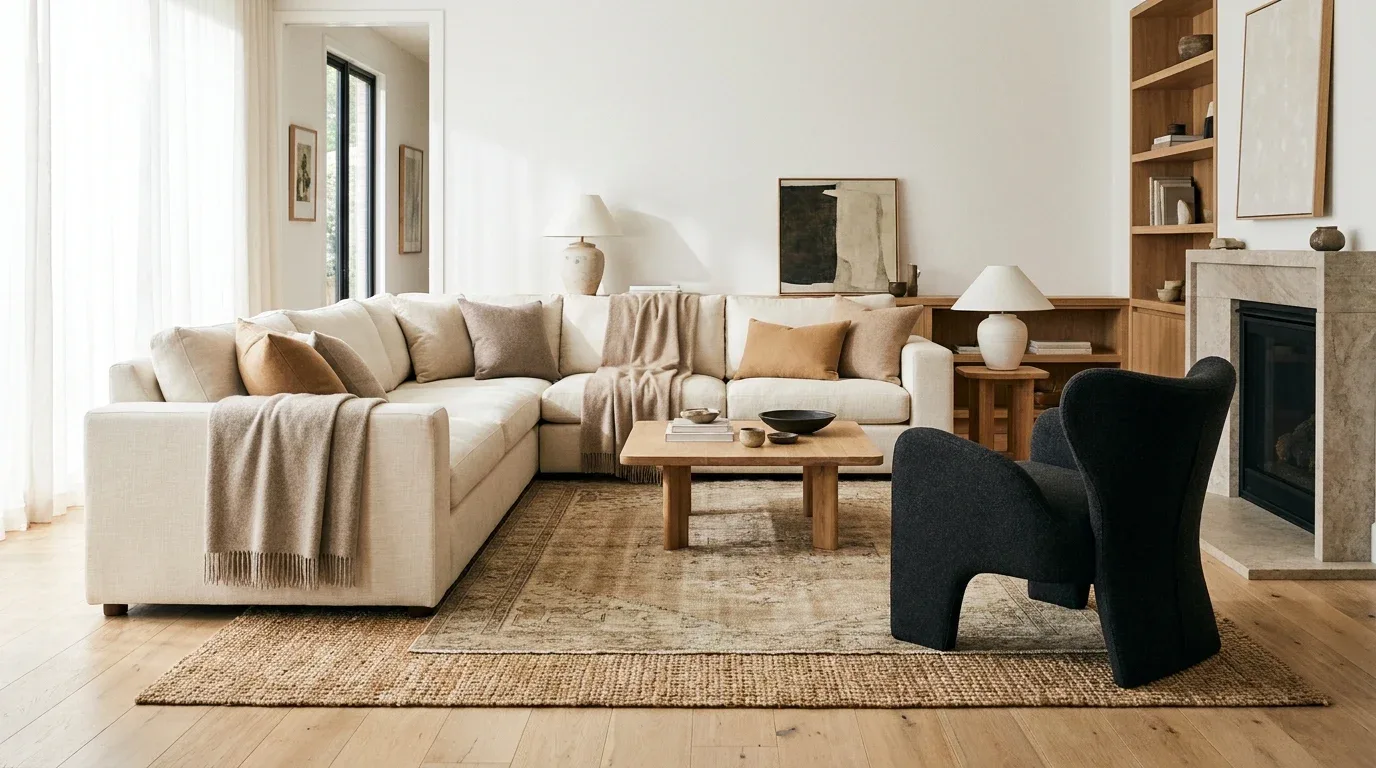
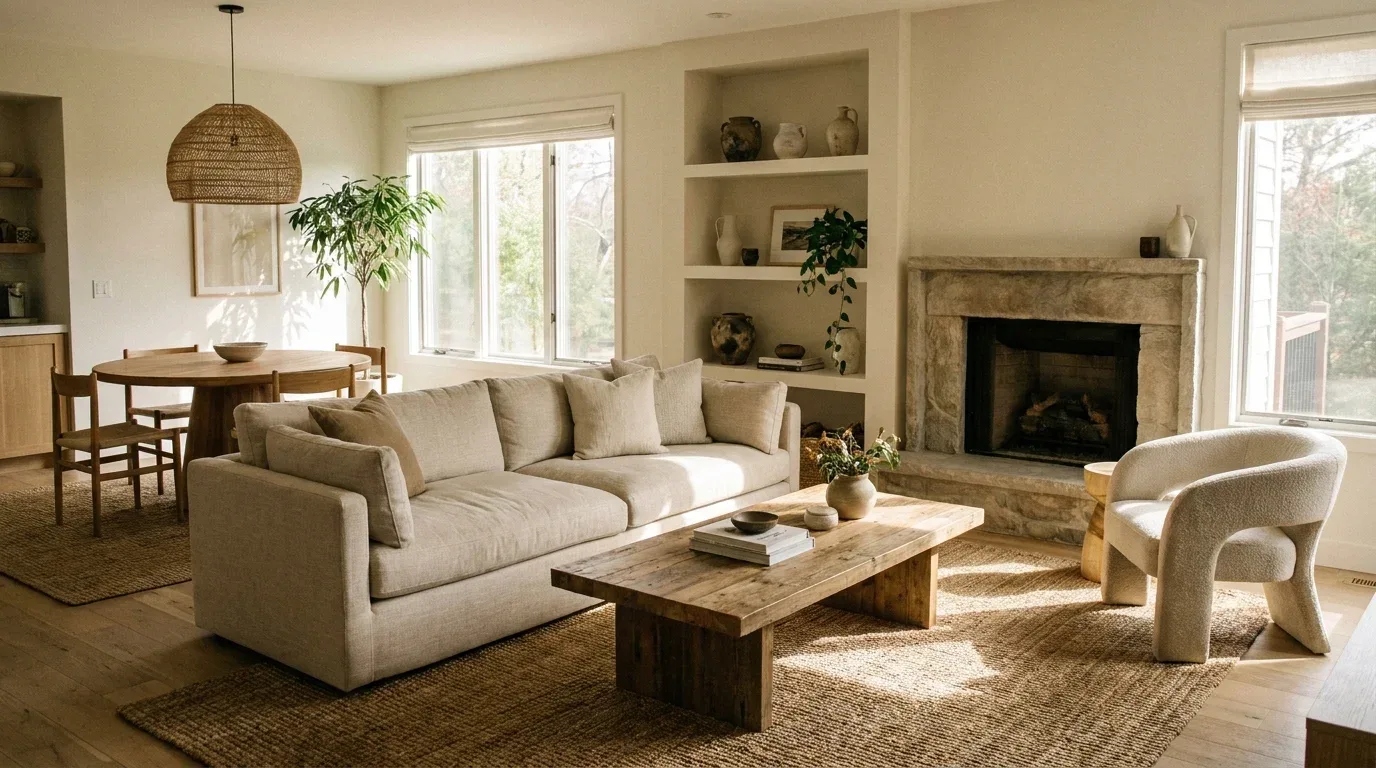
Cool gray interiors are giving way to warmer neutrals that make modern spaces feel more inviting. Shades such as creamy white, oatmeal, taupe, mushroom, sand, and warm beige provide a calm foundation while allowing furniture and accessories to stand out. This approach works especially well in open-plan homes because a restrained neutral palette can visually connect several areas without making them feel identical.
Instead of choosing one neutral for everything, layer two or three closely related shades. A warm ivory wall can pair with a beige sofa, natural wood furniture, and a taupe rug. The subtle variation creates depth without visual clutter. If your room already has cool flooring or cabinetry, introduce warmth through textiles, artwork, baskets, and wood accents rather than replacing expensive finishes.
For a more contemporary result, add one darker element such as a charcoal accent chair, bronze light fixture, or espresso-toned side table. The contrast keeps a neutral room from looking flat and gives the space a polished, designer-inspired quality.
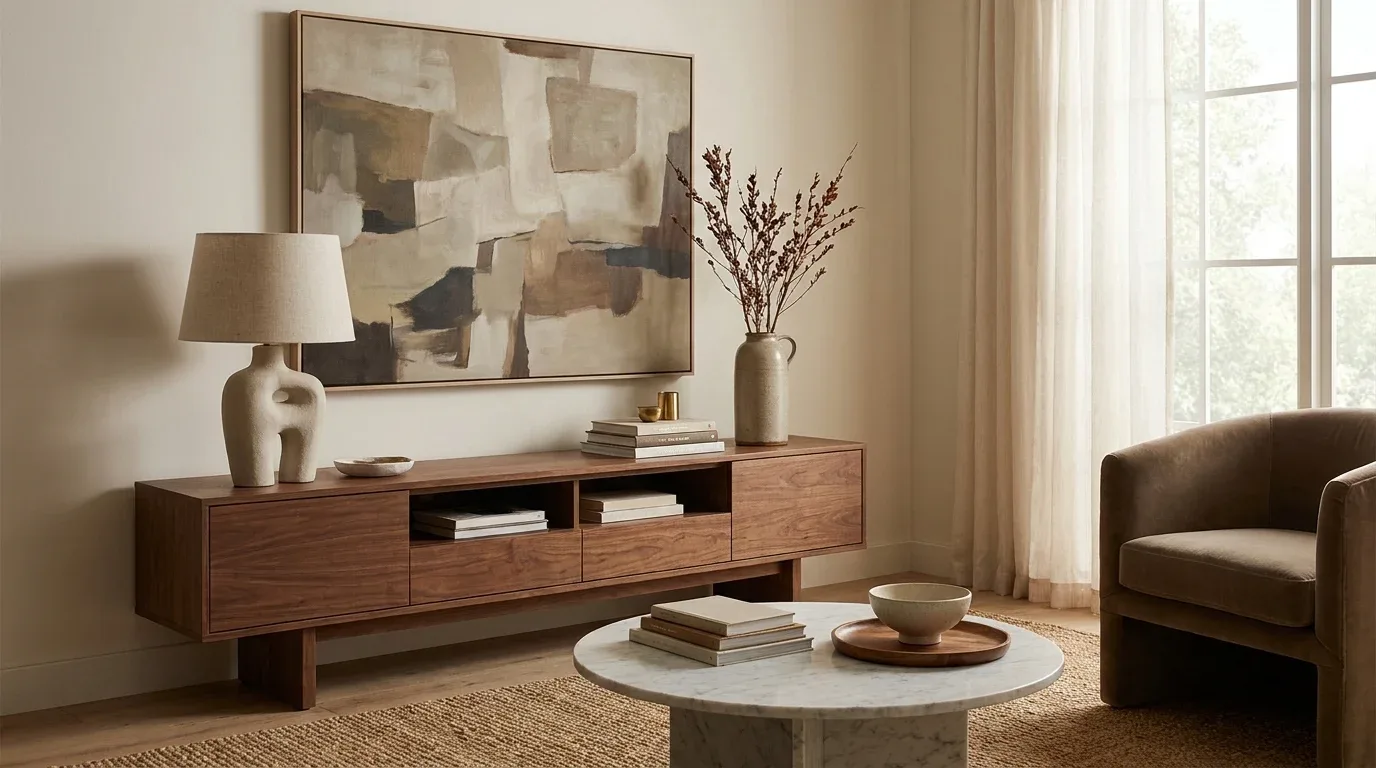
2. Natural Materials Bring Organic Character Indoors
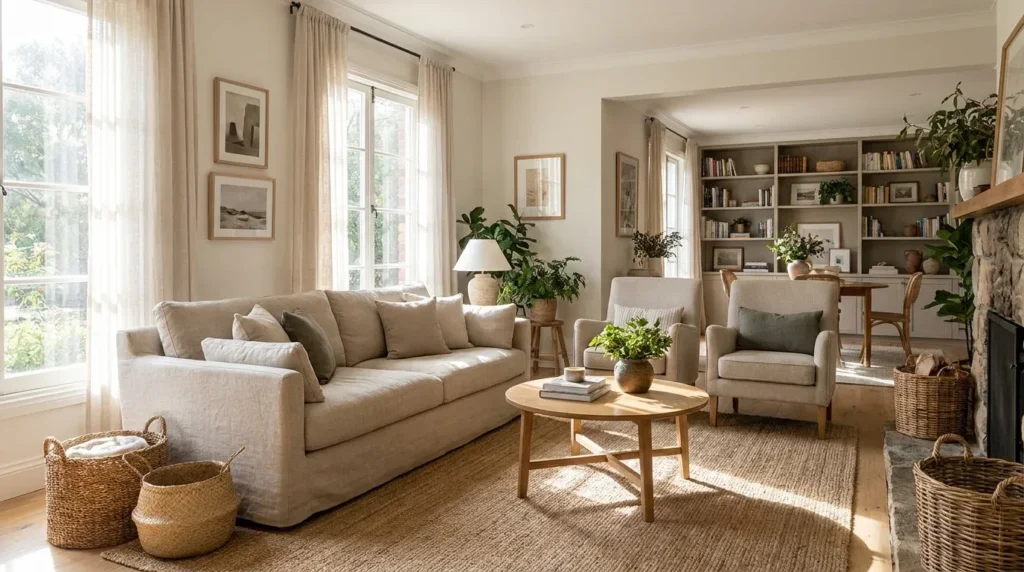
One of the most versatile modern home decor trends is the use of natural materials. Wood, stone, linen, rattan, jute, ceramic, and woven fibers add texture and warmth to rooms dominated by smooth contemporary surfaces. They also help a modern interior feel less sterile and more connected to the natural world.
You do not need to remodel a room to embrace this trend. Replace a glossy accent table with a wood version, add linen curtains, introduce a woven basket for storage, or place a handmade ceramic vase on a shelf. Even a single substantial wood piece can change the character of a room.
How to Mix Natural Textures
Balance is important. Too many rustic materials can make a room feel themed rather than modern. Pair organic finishes with cleaner shapes and streamlined furniture. For example, a simple contemporary sofa looks especially attractive with a textured jute rug and a sculptural wooden coffee table. In the bedroom, combine crisp bedding with a cane bench, woven pendant, or natural wood nightstand.
Choose materials that show subtle variation rather than looking perfectly uniform. Natural grain, handmade imperfections, and woven textures give a room depth that mass-produced decorative pieces often lack.
3. Sculptural Furniture Adds an Artistic Focal Point
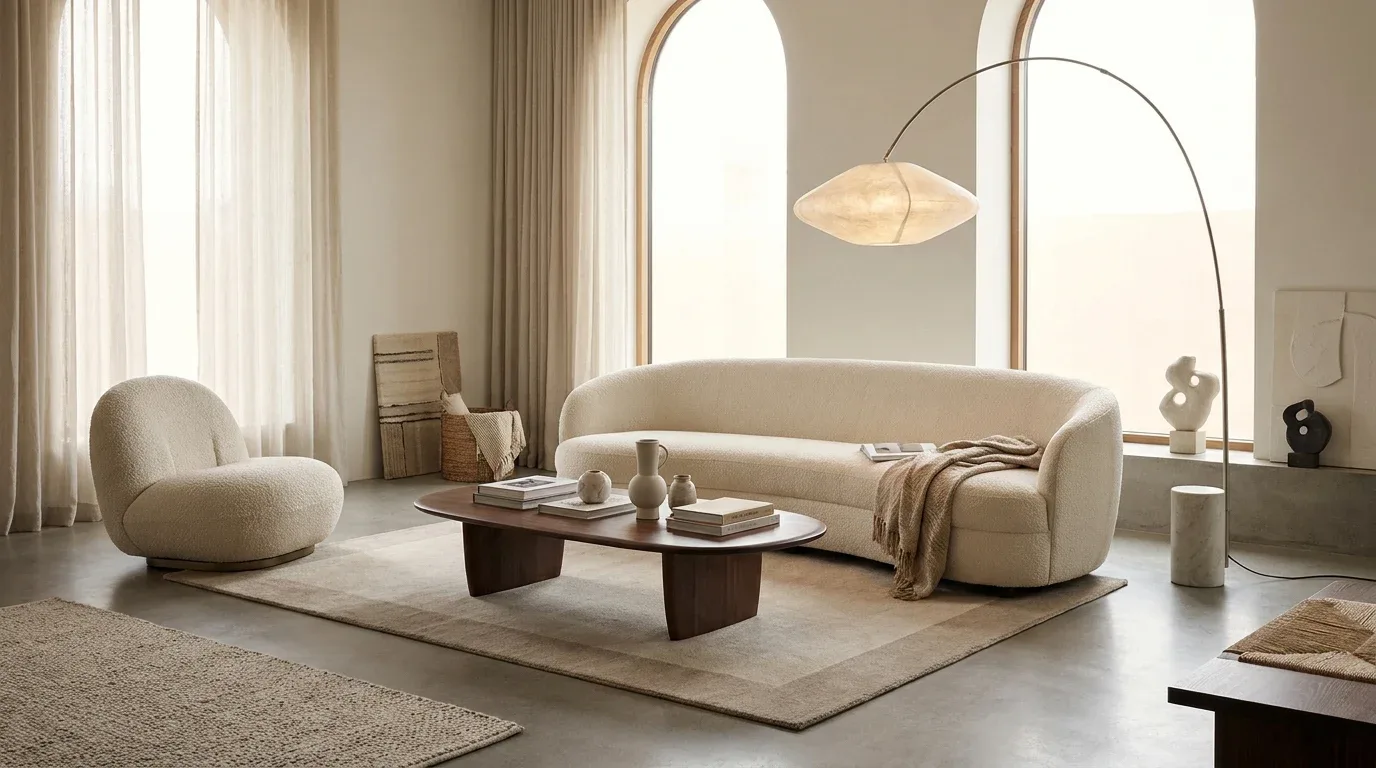
Modern interiors are increasingly using furniture as visual art. Curved sofas, rounded coffee tables, pedestal dining tables, arched chairs, and unusually shaped lamps can give an otherwise simple room a strong focal point. This trend is especially effective when the rest of the room has a restrained color palette.
Curves can also soften spaces filled with hard architectural lines. A rectangular room with square cabinetry, straight shelving, and large windows can feel more balanced when you introduce a round rug, curved chair, or oval table. You do not need several sculptural pieces; one memorable shape is often enough.
Make Statement Furniture Practical
Before buying a dramatic piece, consider scale and everyday use. A beautiful oversized chair may overwhelm a small living room, while a delicate side table may disappear beside a large sectional. Measure the available floor area and leave comfortable pathways around furniture.
For a budget-friendly update, look for sculptural lamps, mirrors, stools, or side tables instead of replacing your largest furniture pieces. These smaller elements can deliver the same contemporary effect while allowing you to keep functional staples you already own.
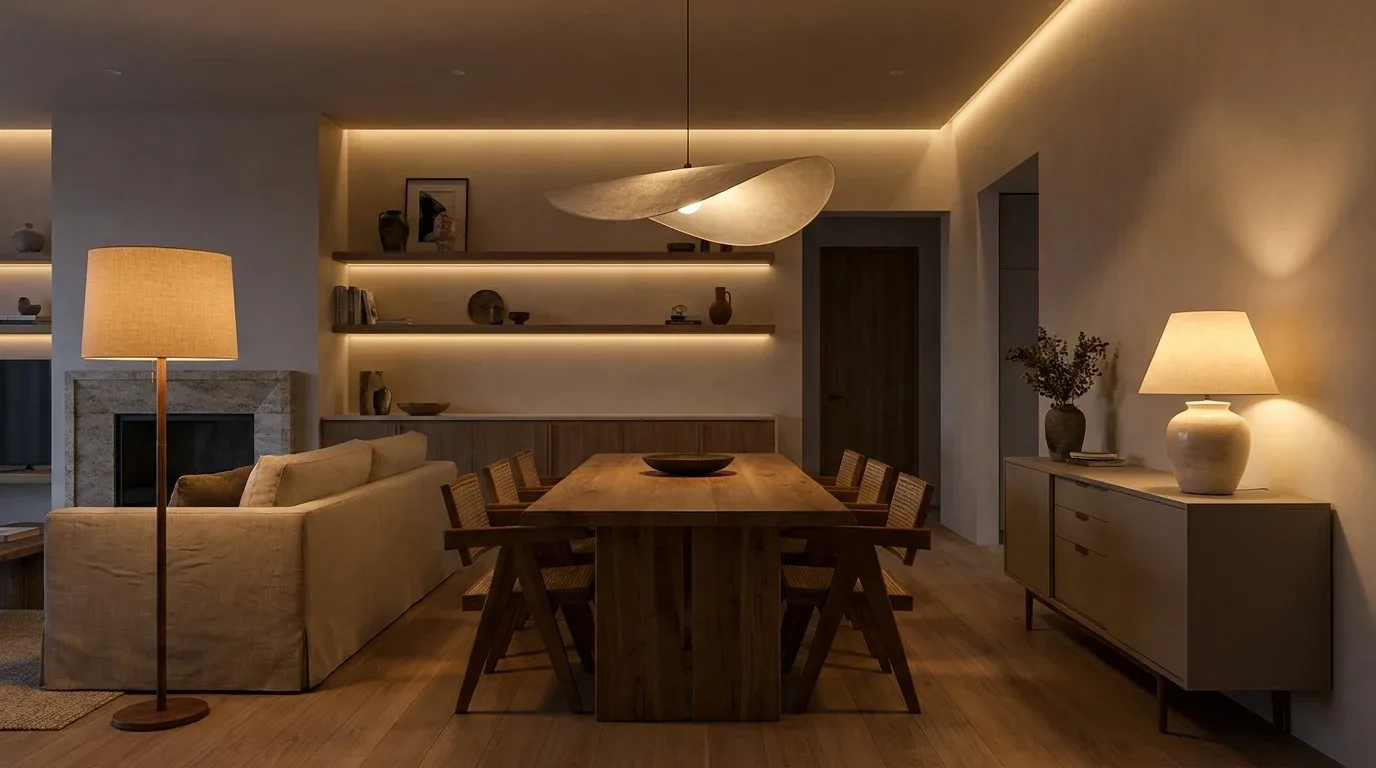
4. Layered Lighting Makes Rooms Feel More Expensive
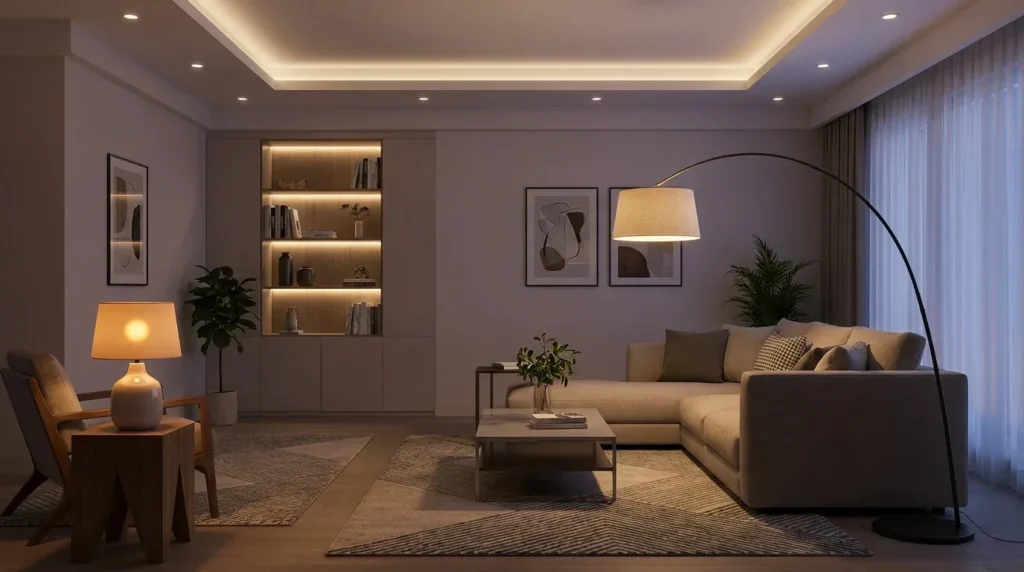
Good lighting can transform a room more dramatically than many decorative purchases. Modern interiors increasingly use multiple light sources at different heights instead of relying on one overhead fixture. This creates a softer atmosphere while allowing you to change the mood of a room throughout the day.
Start with ambient lighting, such as a ceiling fixture, then add task lighting for activities like reading, cooking, or working. Finish with accent lighting that highlights artwork, shelving, plants, or architectural features. Table lamps, floor lamps, wall sconces, and small decorative lights all provide opportunities to build layers.
Use Lighting as Decor
Light fixtures should be treated as part of the room’s design rather than hidden necessities. A sculptural pendant can anchor a dining area, while a pair of matching sconces can frame a bed or fireplace. Choose finishes that repeat materials already present in the room, such as aged brass, matte black, brushed metal, or warm wood.
Whenever possible, use warm-toned bulbs and dimmers. The ability to reduce brightness in the evening instantly makes a modern space feel more comfortable and sophisticated.
5. Earthy Colors Add Depth Without Overwhelming a Room
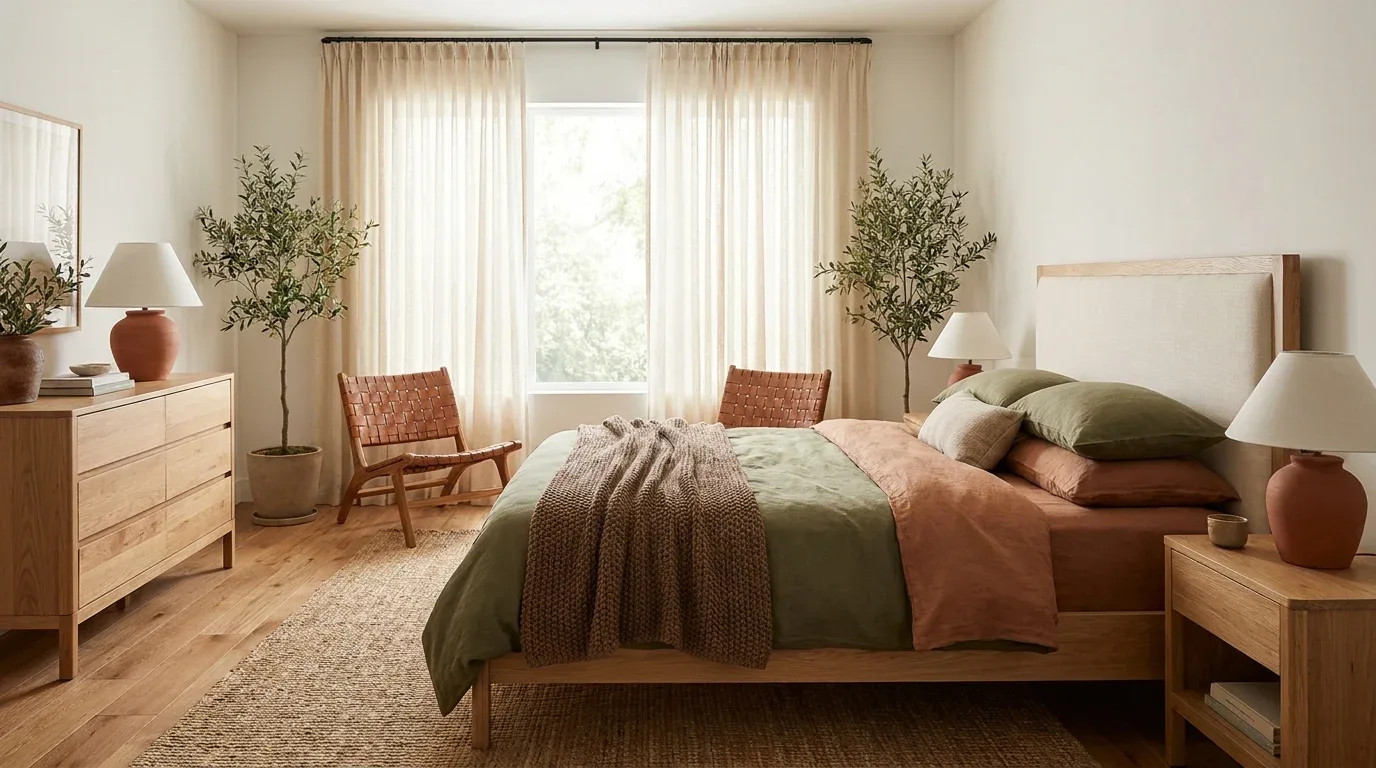
Modern decorating is moving beyond strictly white and gray interiors toward richer shades inspired by nature. Terracotta, olive, clay, muted blue, warm brown, dusty green, and deep rust can add personality while still feeling sophisticated. These colors work particularly well when introduced through removable or relatively inexpensive elements.
If you are nervous about using color, start with accessories. Add an olive throw, rust-colored cushions, earthy artwork, or a ceramic lamp with a deep natural glaze. Once you see how the color interacts with the existing room, you can decide whether to use it more extensively.
Build a Balanced Color Palette
A simple approach is to choose one dominant neutral, one supporting earthy color, and one small accent. For example, warm white walls can work with tan furniture, olive textiles, and touches of aged brass. In a bedroom, muted blue can provide a restful accent against cream bedding and medium-toned wood.
Keep stronger colors concentrated in a few intentional locations rather than scattering them everywhere. Repeating a color two or three times creates cohesion and makes the room look deliberately designed.
6. Statement Walls Create Impact Without a Full Makeover
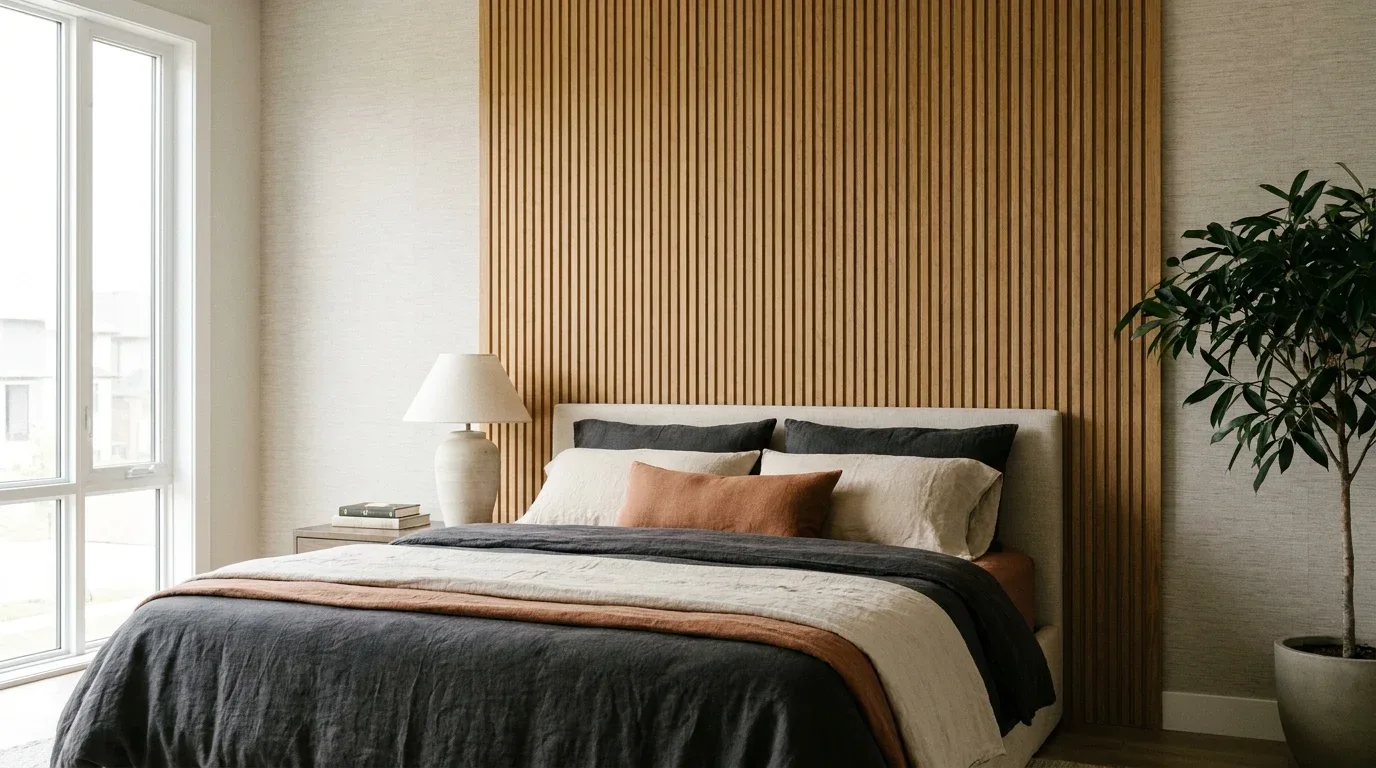
A statement wall can completely change the personality of a room while keeping the rest of the space relatively simple. Paint is the most accessible option, but wallpaper, textured plaster, wood paneling, large-scale art, and even a carefully arranged gallery wall can create a similar focal point.
Choose a wall that naturally deserves attention. Behind a bed, sofa, dining table, or fireplace is often more effective than selecting a random wall. The goal is to strengthen the room’s existing layout rather than distract from it.
Choose the Right Treatment
For a refined modern look, consider muted colors, subtle geometric wallpaper, vertical paneling, or a textured finish rather than overly busy patterns. A dark accent wall can make a large room feel more intimate, while a soft earthy shade can add warmth to a minimalist space.
Keep surrounding decor relatively controlled so the statement surface can breathe. A statement wall does not need dozens of accessories competing with it. One large artwork, a simple console, or a few carefully chosen objects may be enough to complete the composition.
7. Indoor Plants Add Life and Visual Balance
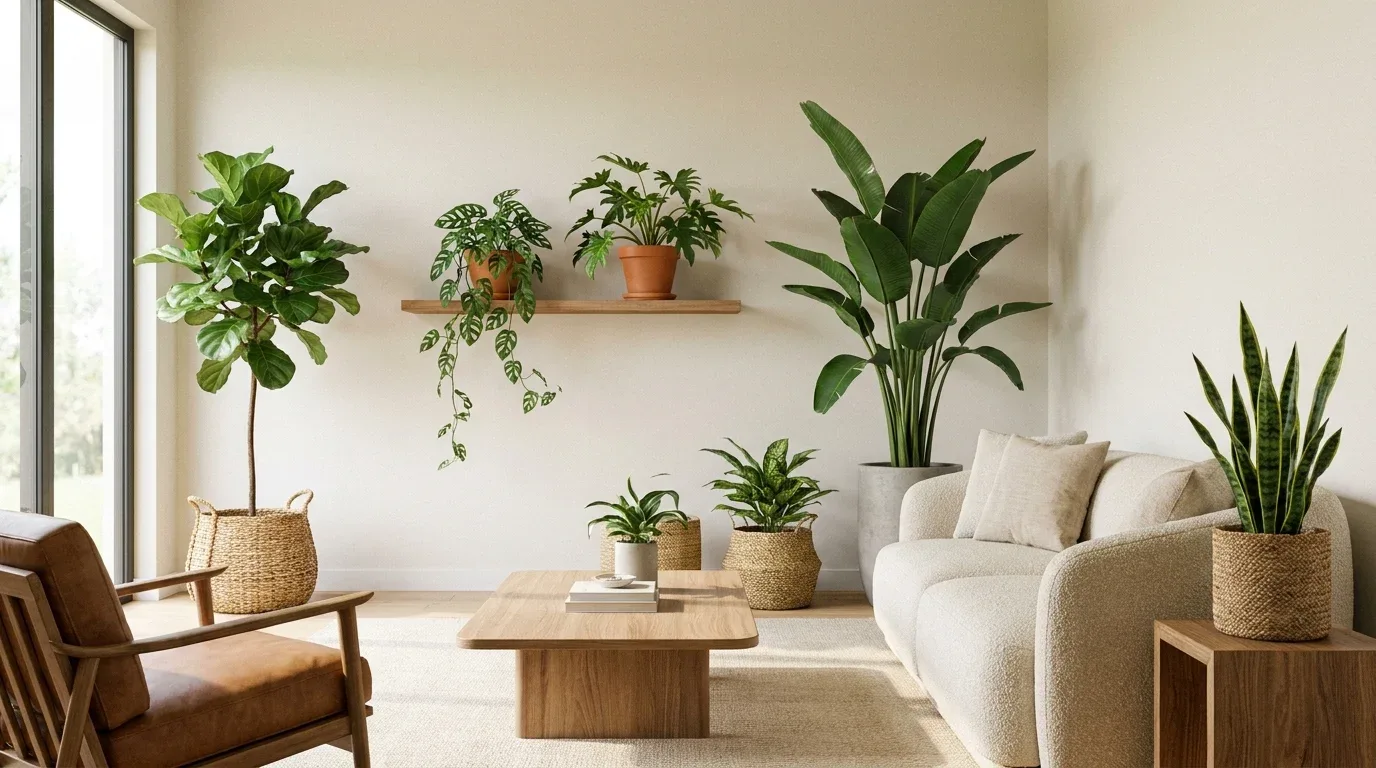
Plants remain one of the easiest ways to make modern interiors feel more alive. Their organic shapes introduce movement against straight architectural lines, while green foliage works naturally with neutral, earthy, and wood-heavy color schemes.
Choose plants based on the actual light conditions in your home rather than selecting them solely for appearance. A bright living room may support larger sun-loving varieties, while lower-light spaces can benefit from plants suited to indirect light. If maintaining live plants is difficult, a small number of high-quality faux plants can still provide visual softness without creating a maintenance routine.
Style Plants Like Furniture
Think about height, scale, and placement. A tall plant can fill an empty corner beside a sofa, while smaller plants work well on shelves, consoles, and kitchen counters. Use attractive planters that complement the room’s existing materials, such as ceramic, stone, woven fiber, or simple matte finishes.
Avoid placing plants everywhere. A few strategically positioned specimens usually look more sophisticated than a collection scattered across every available surface.
8. Curated Decor Keeps Modern Rooms From Feeling Cluttered
Modern design does not require an empty room. Instead, it benefits from intentional editing. The latest approach to styling emphasizes fewer, more meaningful objects rather than filling every shelf and tabletop with small decorations. This creates visual breathing room and makes individual pieces more noticeable.
Start by removing anything that no longer serves a purpose or feels connected to your style. Then group the remaining pieces into simple arrangements. On a console, for example, combine one large artwork or mirror with a lamp and a small decorative object. On a coffee table, a tray can organize books, a candle, and a ceramic vessel into one cohesive composition.
Create Cohesion Through Repetition
Repeat materials, shapes, or colors throughout the room to create a polished appearance. If your lighting uses brass, echo that finish in a frame or decorative object. If your furniture features curved edges, introduce another rounded shape through a mirror or vase.
The goal is not perfection but visual intention. Give important pieces room to stand out, keep surfaces functional, and resist the temptation to decorate every empty corner. A thoughtfully edited room often feels more luxurious, spacious, and contemporary than one filled with expensive accessories.
How to Combine Modern Decor Trends Without Making a Room Feel Trendy
The most successful modern interiors rarely rely on a single trend. Instead, they combine several compatible ideas while maintaining a consistent foundation. Start with one dominant style direction, such as warm minimalism, organic modern, or contemporary comfort. Then introduce two or three supporting trends rather than trying to use everything at once.
For example, a living room could combine warm neutral walls, natural wood, sculptural furniture, layered lighting, and a few earthy accents. Each element contributes something different, but the shared palette and restrained styling keep the room cohesive.
Before buying anything, identify what the room actually lacks. If it feels cold, add texture and warmth. If it feels flat, introduce contrast or sculptural shapes. If it feels dark, improve the lighting. If it feels cluttered, edit rather than add more decor. This problem-solving approach makes modern home decorating more practical and helps ensure that every update improves the way the room looks and functions.
 10 Simple Home Decor Ideas to Refresh Your Space
 How to Make Your Home Look Expensive on a Budget
 Miss Mae Kelly, director of instruction, with teachers at Randolph Henry High School, Keysville, Virginia. Photo by Philip Bonn, 1943.